Glibett CMS2 for Digital Creative Agency: A Practical Evaluation
In the competitive landscape of digital design, agencies require tools that balance aesthetic precision with functional efficiency. Glibett CMS2 for Digital Creative Agency represents a specific category of resource designed to streamline this process. It is a meticulously crafted Figma template intended to help agencies structure their content management systems (CMS) and blog details pages. For teams evaluating their design workflows, understanding what this tool offers, where it fits, and how it compares to other options is essential for making an informed decision.
Understanding the Core Offering
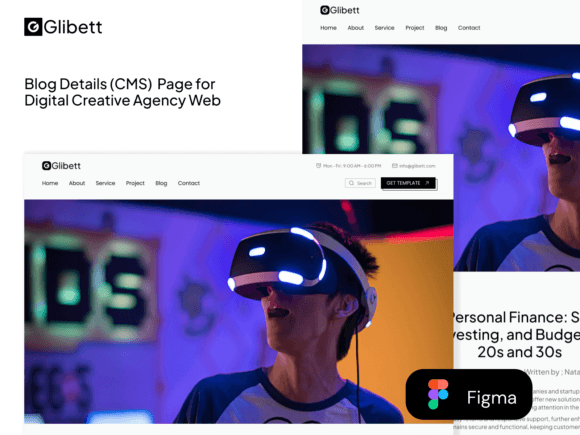
Glibett CMS2 for Digital Creative Agency is not a software application or a backend platform; rather, it is a high-fidelity design system component available as a Figma file. Specifically, it focuses on the "Blog Details" page within a broader CMS context. This single-page template provides a structured layout for presenting detailed articles, news updates, or case studies in a professional format. The design prioritizes readability, visual hierarchy, and the integration of various content elements such as headers, body text, images, and metadata.
The primary value proposition lies in its pre-constructed nature. Instead of building a blog post interface from scratch, designers can utilize this template as a foundational layer. It includes features like auto-layout capabilities, which ensure that the design remains consistent across different screen sizes. By offering a clean and professional look out of the box, it aims to reduce the initial time investment required to launch a new website or redesign an existing one.
Reasons to Consider This Template
There are several practical reasons why a digital creative agency might be interested in adopting Glibett CMS2 for Digital Creative Agency into their workflow. First, time efficiency is a significant factor. Developing a responsive, pixel-perfect blog detail page involves complex decisions regarding typography, spacing, and grid systems. This template resolves those decisions upfront, allowing the team to focus on content strategy and customization rather than basic layout construction.
Secondly, the template addresses the need for consistency. In agency work, maintaining a cohesive brand identity across multiple client projects or internal platforms is crucial. The comprehensive CMS design ensures that every blog post follows a uniform structure, which enhances user experience and reinforces brand recognition. The fully customizable nature of the file means that while the structure is rigid enough to provide stability, it is flexible enough to adapt to unique brand guidelines.
Finally, the inclusion of responsive layout features is vital in today's mobile-first environment. The auto-layout features built into the template ensure that the design adapts fluidly from desktop monitors to mobile devices without requiring manual adjustments for every breakpoint. This technical foresight reduces the risk of broken layouts during the development handoff phase.
Benefits and Tradeoffs
Evaluating any design asset requires a balanced view of its advantages and limitations. The benefits of using Glibett CMS2 for Digital Creative Agency are clear: rapid prototyping, reduced design debt, and a modern aesthetic that aligns with current web trends. It serves as a robust starting point that can accelerate the project timeline significantly. Furthermore, because it is part of a larger series, it often integrates well with other components if the agency chooses to adopt the full ecosystem.
However, there are tradeoffs to consider. One potential limitation is the reliance on a predefined structure. While the template is customizable, deviating too far from the original design intent may require substantial effort to re-engineer the underlying auto-layout constraints. Teams that require highly experimental or unconventional layouts might find the template restrictive. Additionally, users must remember that the images used in previews are for display purposes only and are not included in the download. This means the final implementation will require sourcing and optimizing appropriate assets, adding a step to the production process.
Another consideration is the learning curve for teams unfamiliar with advanced Figma features. To fully leverage the auto-layout and component properties, designers need a solid understanding of Figma's interface. Without this knowledge, the template might function merely as a static mockup rather than a dynamic design system.
Situations Where It Is a Strong Fit
Glibett CMS2 for Digital Creative Agency is particularly well-suited for specific scenarios. It is an ideal choice for agencies managing multiple client websites where speed and consistency are paramount. If a team needs to deploy a professional-looking blog section quickly, this template provides a reliable solution. It is also beneficial for startups or smaller agencies that may not have a dedicated UI/UX designer available to build complex interfaces from the ground up.
Furthermore, it fits well in situations where the content strategy is already defined but the visual presentation needs refinement. When the focus is on delivering high-quality written content through a clean, distraction-free interface, the minimalist and functional design of this template supports that goal effectively. It is also a strong fit for teams transitioning from static designs to more dynamic, component-based workflows in Figma.
When Alternatives May Be Worth Considering
Despite its strengths, Glibett CMS2 for Digital Creative Agency may not be the right choice for every project. If a project requires a highly bespoke, avant-garde design that defies standard web conventions, a custom-built approach might be more appropriate. Templates, by definition, follow established patterns, which may not suit brands aiming to disrupt the market with unique visual identities.
Additionally, if the agency has an existing, mature design system, integrating a third-party template could introduce inconsistencies. In such cases, it might be more efficient to extend the current system rather than importing a new set of styles and components. Finally, for teams with very limited Figma expertise, a simpler, code-based theme or a no-code builder might offer a more straightforward path to deployment without the need for design file manipulation.
Practical Decision-Making Insights
To determine whether Glibett CMS2 for Digital Creative Agency aligns with your goals, consider the following factors. First, assess your timeline. If you are under pressure to deliver, the time saved by using a template often outweighs the minor compromises in total customization. Second, evaluate your team's skill set. Ensure that at least one team member is proficient in Figma's auto-layout and component features to maximize the template's potential.
Third, review the scope of your project. If the blog is a central pillar of your marketing strategy, investing in a high-quality template like this one ensures a professional foundation. However, if the blog is secondary, a simpler solution might suffice. Finally, consider the long-term maintenance. A well-structured template makes future updates easier, provided the design system is managed correctly.
In conclusion, Glibett CMS2 for Digital Creative Agency offers a pragmatic solution for agencies seeking to enhance their content presentation efficiently. By weighing the benefits of speed and consistency against the need for total design freedom, teams can make an objective decision on whether this tool serves their specific operational needs.