Medical and Healthcare 3D Illustrations
In the fast-paced world of digital communication, clarity is everything. Whether you are a doctor explaining a complex procedure to a patient or a startup founder pitching a new health app, the visual elements you choose can make or break your message. This is where Medical and Healthcare 3D Illustrations become an indispensable tool. Unlike flat, two-dimensional clip art that often feels dated or generic, three-dimensional visuals bring depth, realism, and a sense of tangible presence to your content. They transform abstract medical concepts into something viewers can instantly understand and connect with.
Why Depth Matters in Visual Communication
The primary purpose of these illustrations is to bridge the gap between technical complexity and human understanding. Medical topics are inherently dense; they involve anatomy, machinery, processes, and data that can be overwhelming when presented as text alone. A high-quality 3D model allows you to show rather than just tell. It adds a layer of professionalism and trustworthiness that is crucial in the healthcare sector.
When you incorporate Medical and Healthcare 3D Illustrations into your workflow, you are not just adding decoration; you are enhancing comprehension. The lighting, shadows, and textures inherent in 3D rendering mimic the real world. This realism helps audiences visualize how a device works, how a medication interacts with the body, or what a specific condition looks like without relying on graphic or potentially distressing photography. For educators, this means better retention rates for students. For marketers, it means higher engagement and conversion rates because the audience stays focused longer on visually rich content.
Transforming Your Digital Projects
The versatility of these assets is one of their greatest strengths. You might be wondering where exactly you can apply them. The possibilities are vast, ranging from personal creative projects to large-scale commercial campaigns. Here is how these illustrations can elevate different aspects of your work:
- Web Designs and UI: In user interface design, especially for health apps or telemedicine platforms, icons need to be intuitive. A 3D stethoscope or pill bottle icon stands out more than a flat vector, guiding the user's eye and making navigation feel modern and polished.
- Presentation Slides: If you are presenting to investors, colleagues, or patients, your slides need to hold attention. Replacing bullet points with a 3D render of a heart valve or a futuristic hospital room adds a dynamic element that keeps the audience engaged throughout your talk.
- Animations and Motion Graphics: Static images are great, but motion brings them to life. Because these assets are often created in software like Blender, they can be easily animated to show movement, such as a capsule dissolving or a robotic arm assembling, which is perfect for explainer videos.
- Posters and Print Materials: High-resolution renders ensure that your printed materials look crisp and professional. Whether it's a poster for a health fair or a brochure for a clinic, the depth of field in 3D illustrations creates a premium look that commands respect.
What You Get: A Complete Creative Toolkit
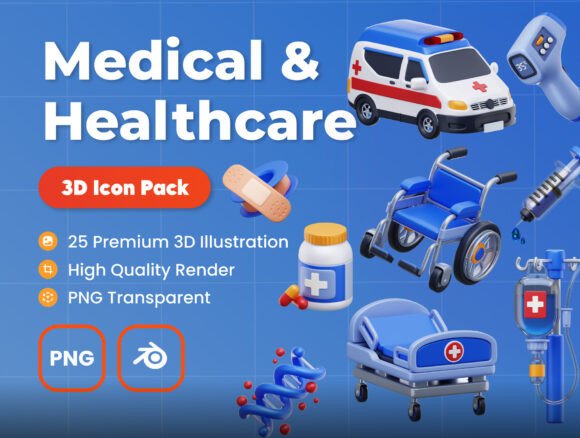
For creators looking to streamline their workflow without sacrificing quality, having access to a robust collection is essential. Imagine a package designed specifically to meet the diverse needs of designers, developers, and communicators. Such a collection typically includes 25 unique 3D Icons covering a wide range of medical themes. These aren't just random shapes; they are carefully crafted representations of healthcare essentials, from diagnostic tools to wellness symbols.
One of the most critical features for any professional designer is resolution. With files provided at High Resolution 3000 x 3000px, you have the flexibility to use these images anywhere. You can zoom in for detailed close-ups in a magazine layout or scale them down for mobile app icons without worrying about pixelation or loss of quality. This ensures your final output always looks sharp and intentional.
Furthermore, true customization is key to branding. Many stock images force you to use colors that don't match your brand identity. However, with Editable Objects and Colors, you retain full control. You can adjust the hue of a medical cross to match your company logo or change the material of a device to fit a specific aesthetic. This level of editability turns a generic asset into a bespoke element tailored to your specific project requirements.
Accessibility for Every Skill Level
A common misconception is that working with 3D graphics requires advanced technical skills or expensive hardware. Fortunately, modern resources are designed to be Easy to Use for everyone. Whether you are a seasoned 3D artist or a beginner just starting with graphic design, the learning curve is minimized. The assets come ready to integrate into your favorite design software, saving you hours of modeling and texturing time.
For those who prefer to work within the realm of 3D creation, having access to the source files in formats like Blender PNG (or compatible Blender project files) opens up a world of possibility. You can tweak the camera angles, adjust the lighting setup, or even combine multiple objects to create entirely new scenes. And if you just need the image quickly, the files are Ready to render, meaning you can export a high-quality image with a single click. This dual approach caters to both the quick-turnaround freelancer and the meticulous creative director.
Key Considerations Before You Start
While the benefits are clear, there are a few practical things to keep in mind before integrating these illustrations into your workflow. First, consider your context. While 3D adds value, it should serve the message, not distract from it. Ensure the style of the illustration matches the tone of your content. A playful, cartoonish 3D style might work well for a children's health app, whereas a sleek, photorealistic style is better suited for a surgical equipment catalog.
Secondly, think about file management. Since these are high-resolution assets, they can take up significant storage space. Organizing your library effectively will help you find the right icon or model quickly when deadlines loom. Finally, remember that while these tools are powerful, they are part of a larger design ecosystem. They work best when paired with strong typography, thoughtful color theory, and clear copy.
Bringing Your Vision to Life
Ultimately, the goal of using Medical and Healthcare 3D Illustrations is to enhance your designs, animations, web designs, UI designs, presentation slides, posters, and more. By adding unique and interesting elements to your designs, you differentiate yourself in a crowded market. You show your audience that you care about detail and clarity.
Whether you are building a portfolio, launching a product, or teaching a class, the right visual assets can transform a good idea into a great experience. Don't let technical limitations hold you back from creating stunning visuals. With the right toolkit, you have everything you need to succeed. Feel free to contact me if you have any questions about how these assets can fit into your specific project. Enjoy the process of creating something truly impactful.