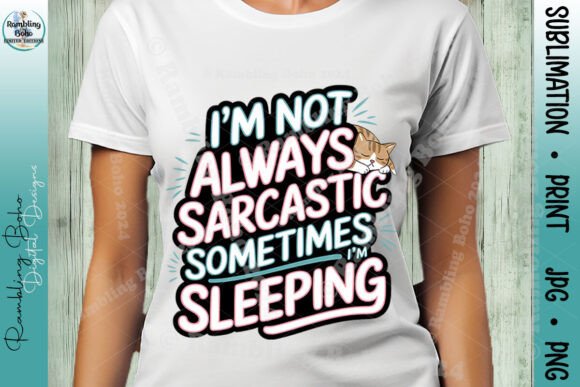
Unlocking Creativity: The Power of "I'm Not Always Sarcastic, I'm Sleeping" Digital Designs
In the vibrant world of modern crafting and small business entrepreneurship, the intersection of humor and high-quality design has never been more lucrative. One phrase that has captured the imagination of creators and consumers alike is "I'm Not Always Sarcastic, I'm Sleeping." This witty slogan serves as more than just a funny quote; it represents a specific niche in the digital asset market where personality meets practical application. Whether you are a seasoned sublimation artist or a beginner looking to start your own print-on-demand store, understanding how to utilize digital designs like this one is essential for success.
This article explores the significance of high-resolution digital downloads, the versatility of file formats, and how a simple, humorous graphic can be transformed into a wide array of physical products. We will demystify the technical aspects of working with 300dpi files, explain the creative possibilities of transparency, and guide you through the ecosystem of digital marketplaces like Creative Fabrica.
The Appeal of Humorous and Relatable Design
Why does a phrase about sarcasm and sleep resonate so deeply? In an era of constant connectivity and burnout, humor acts as a universal language. The statement "I'm Not Always Sarcastic, I'm Sleeping" taps into a shared human experience: the need for rest and the defensive shield of wit when we are tired. For businesses, leveraging such relatable content is a powerful marketing strategy.
Designs that fall into categories like humorous, holiday, and farm-themed appeal to diverse audiences. They allow creators to target specific demographics without needing to invent complex concepts from scratch. When you purchase a pre-made design, you are acquiring a proven concept that has already resonated with people. The key lies in execution—how well the design translates from a digital screen to a tangible product.
Understanding the Versatility of Modern Graphics
The true value of a digital download lies in its adaptability. Unlike a physical sticker or a pre-printed shirt, a digital file is a blank canvas waiting for your vision. The designs available today are crafted to be extra large and scalable. This means you are not limited by size constraints. You can shrink a design to fit a keychain or enlarge it to cover a full-sized banner without losing quality.
This scalability is crucial for entrepreneurs who want to diversify their product lines. Imagine taking the same sarcastic sleeping design and applying it to:
- Mugs and Tumblers: Perfect for morning coffee routines where the sentiment hits home.
- T-Shirts and Hoodies: A great conversation starter for casual wear.
- Home Decor: Canvas prints or pillows that add personality to a bedroom or office.
- Stickers and Decals: Small accessories for laptops, water bottles, or cars.
The ability to re-size these graphics ensures that a single purchase can yield dozens of different SKUs (Stock Keeping Units), maximizing your return on investment.
Technical Excellence: Why 300 DPI Matters
For those new to the world of printing, the term DPI (Dots Per Inch) can be confusing, yet it is the most critical factor in print quality. Most web images are designed at 72 DPI, which looks fine on a monitor but becomes pixelated and blurry when printed. High-quality digital assets, such as the ones featuring our favorite sleep-related quotes, are created at 300 DPI.
This resolution standard is the industry benchmark for professional printing. It ensures that every curve, letter, and artistic element remains crisp and sharp, even when viewed up close. Whether you are using a heat press for sublimation, a direct-to-film (DTF) printer, or sending files to a professional print shop, 300 DPI guarantees that your final product looks polished and professional.
The Importance of File Formats: PNG vs. JPG
When you download a design package, you typically receive two primary file types: PNG and JPG. Understanding the difference between them is vital for efficient workflow.
The JPG (Joint Photographic Experts Group) format is excellent for viewing the design on a computer or sharing it on social media. However, it includes a background, usually white, which can make editing difficult if you want to place the text over a colored t-shirt.
The PNG (Portable Network Graphics) format is the powerhouse of the digital craft world. As noted in high-quality listings, PNG files feature transparency unless otherwise specified. This means the background is invisible, allowing you to overlay the text "I'm Not Always Sarcastic, I'm Sleeping" onto any color or pattern without a white box surrounding it. This transparency is essential for sublimation and DTF processes, where the ink needs to adhere directly to the substrate without interference from a background layer.
Workflow Integration: Software and Compatibility
One of the greatest advantages of these digital assets is their compatibility with a wide range of software programs. Whether you are a tech-savvy designer or a hobbyist using user-friendly tools, these files are designed to open seamlessly.
You can import these graphics into industry-standard applications such as:
- Adobe Illustrator: Ideal for vector manipulation and professional layout work.
- Photoshop: Perfect for photo editing, adding effects, and compositing.
- Affinity Designer/Photo: A powerful, cost-effective alternative to Adobe suites.
- Silhouette Studio: The go-to software for cutting machines used in vinyl and heat transfer projects.
It is important to clarify a common misconception: while these files are compatible with these programs, they are raster images, not vectors. The listing explicitly states that there are no cut, craft, or vector files enclosed. This means you cannot use a cutting machine to trace the lines of the text for vinyl weeding in the traditional sense. Instead, these are intended for printing methods like sublimation, DTF, or DTG (Direct to Garment), where the entire image is printed as a solid unit. All single elements within the design are manipulated, stacked, and flattened to preserve the artist's integrity, ensuring the visual impact remains intact.
Navigating Licensing and Ethical Use
As you build your creative business, understanding licensing is non-negotiable. Digital downloads come with specific terms of use that protect both the artist and the buyer. It is crucial to read the license agreement carefully.
Typically, these designs are sold as digital downloads only. No physical products will be sent; you receive the files instantly after purchase. Furthermore, the license usually stipulates that the graphic may not be sold as-is. You cannot resell the PNG or JPG file itself to another person. Additionally, many personal-use licenses do not include POD (Print on Demand) licensing. This means if you plan to use services like Printful or Redbubble to sell items automatically, you may need to upgrade your license or ensure the specific design allows for commercial POD use.
Always check the specific terms provided by the seller. Respecting these boundaries supports the artists who create the eclectic mix of humorous, holiday, and farm-themed designs that fuel the creative economy.
Maximizing Your Experience on Marketplaces
Platforms like Creative Fabrica have revolutionized how creators access assets. These platforms often offer incentives for engagement. For instance, writing reviews can earn you coins, which can be redeemed for future purchases. This community-driven approach helps sellers improve their offerings and gives buyers valuable insights.
To stay updated on new releases, it is highly recommended to FOLLOW the store and FAVORITE specific designs. This simple action ensures you don't miss out on seasonal collections or new additions to the product line. By engaging with the seller, you become part of a supportive network of creatives.
Conclusion: Bringing Ideas to Life
The journey from a digital file to a finished product is a testament to the power of modern technology and creativity. A design like "I'm Not Always Sarcastic, I'm Sleeping" is more than just text; it is a tool for expression and a potential revenue stream. By understanding the technical requirements of 300 DPI, the utility of transparent PNGs, and the importance of proper licensing, you can confidently bring these designs to life.
Whether you are decorating your home, starting a side hustle, or expanding an existing business, high-quality digital assets provide the foundation for success. Remember, while colors may vary slightly due to screen settings and printing methods, the core message and quality remain consistent. Embrace the flexibility of these files, experiment with different products, and let your creativity shine through the perfect blend of humor and artistry.